Austin lawrence gay
This Veterans Day, Harvard Failed Its Vets
Harvard has a intense historical connection to the U.S. military. Its alumni contain 18 Medal of Honor recipients, the most of any university besides West Point and the Naval Academy. Memorial Hall, one of Harvard’s flagship buildings, is dedicated to the Harvard alumni who died fighting for the Union in the American Civil War. Harvard’s peace rests on the sacrifices veterans have made.
And yet, Harvard refused to celebrate Veterans Morning — a preference indicative of its general failure to address issues facing veterans on campus.
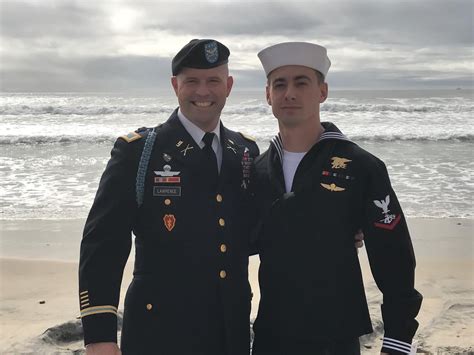
I am vice president of the Harvard Undergraduate Veterans Group and served in the Navy for more than eight years with deployments around the nature. My father sacrificed nearly 30 years in the Army. I have family members both in active duty and separated, as successfully as countless friends still in service.
On Monday, I awoke to text messages from family, friends, past servicemembers, and fellow students. Some were a plain “thank you for your service;” others were longer and more heartfelt.
But Harvard failed to display even the simplest grace to its veteran students. I attended classes on Monday like any other stud
Republish this article for free
All of the Texas Observer’s articles are available for free syndication for news sources under the following conditions:
- Articles must link back to the original article and contain the following attribution at the top of the story: “This article was originally published by the Texas Observer, a nonprofit investigative news outlet and magazine. Sign up for their weekly newsletter, or follow them on Facebook, X, and Bluesky.”
- Articles preferably include Texas Observer alongside author byline (first name last name/Texas Observer).
- Articles cannot be rewritten, edited, or changed beyond alignments with house style books.
- Photos, illustrations, and other art may be free for syndication but must be confirmed. (AP images are not available.) Email [email protected] with questions.
- Please tag the Texas Observer in social media posts promoting the republished story.
- Please notify us by email that the article will be republished at [email protected].
On August 17, 1982, LGBTQ+ Texans celebrated “Gayteenth,” as activists called it at the time—a reference to Juneteenth, which commemor
Seated on a pride float winding its way through Montrose, the heart of Houston’s LGBTQ+ group, John Lawrence and Tyron Garner temporarily assumed the status of queer icons when they served as grand marshals in the city’s 2003 Pride procession. Just days earlier, the two calm men with working-class roots fused their names to a pivotal moment in America’s gay rights movement.
“They were appreciate celebrities,” said Brad Pritchett, who now works as the field director for the LGBTQ+ lobbying group Equality Texas.
Twenty years ago Monday, the U.S. Supreme Court overturned Texas’ ban on sodomy, ruling that states could not criminalize homosexuality. Lawrence and Garner were the plaintiffs in that watershed ruling. Pritchett remembers Houston’s Identity festival parade a several days later feeling different than it normally did, thanks to that 6-3 opinion.
Until then, Diverse people living in Texas and 13 other states lived under a black cloud cast by laws that allowed law enforcement to arrest them for participating in consenting behavior among adults conducted in their private residences.
Lawrence and Garner were arrested and hauled to jail almost five years prior on the suspicion of having sex in th
A Tale of Two Austins: Negotiating Segregation in the Sapphic Community of Austin, Texas
Abstract
Past research on intersections of race and sexuality have been limited to heterosexual people and queer men, with limited investigate on racial dynamics in lesbian communities. Through an exploratory analysis of 10 in-depth interviews, this qualitative research study examines how racism and racial segregation are experienced by people of different races in the sapphic and queer woman community of Austin, Texas. In this paper I analyze results through Bonilla-Silva’s theory of Color-Blind Racism, May’s theory of Integrated Segregation, and Feagin’s Theory of the White Racial Frame. I argue that there is a broad pattern of self-actualizing segregation among my participants, whereby segregation of experience leads to reinforced social segregation. As a result of this finding, I dial for a re-evaluation of how to respond to ongoing segregation in the post-Jim Crow era Joined States, one that considers both the subversive agency of people of tint and the oppressive dominance of white people in social spaces, and how the politics of sexuality further complicated Color-Blind Racism.
Level of Ho
Texas House takes steps to repeal 'homosexual conduct' ban
articleAUSTIN, Texas - The Texas House gave approval to a proposal to repeal a 1973 law banning "homosexual conduct" that was ruled unconstitutional more than 20 years ago.
The U.S. Supreme Court found the ban unconstitutional in 2003 when they ruled in Lawrence v. Texas. The ruling made the state's ban on "deviate sexual intercourse with another individual of the same sex" unenforceable.
What we know:
The passed second reading 72-55 on Thursday. On Friday, the bill passed its ultimate House vote in a much closer 59-56 vote, still with bipartisan support.
The bill heads to the Senate where its companion bill has not been heard in committee.
"We watch forward to our colleagues in the Senate finishing what is long overdue and finally removing this discriminatory law from our books, once and for all," Jones said.
The bill is sponsored by Sens. José Menendez and Molly Cook.
What they're saying:
On the House floor Thursday, Rep. Venton Jones said the bill strengthens the civil liberties of all Texans and urged the other members to vote for stronger individual freedoms for Texan
Texas House takes steps to repeal 'homosexual conduct' ban
AUSTIN, Texas - The Texas House gave approval to a proposal to repeal a 1973 law banning "homosexual conduct" that was ruled unconstitutional more than 20 years ago.
The U.S. Supreme Court found the ban unconstitutional in 2003 when they ruled in Lawrence v. Texas. The ruling made the state's ban on "deviate sexual intercourse with another individual of the same sex" unenforceable.
What we know:
The passed second reading 72-55 on Thursday. On Friday, the bill passed its ultimate House vote in a much closer 59-56 vote, still with bipartisan support.
The bill heads to the Senate where its companion bill has not been heard in committee.
"We watch forward to our colleagues in the Senate finishing what is long overdue and finally removing this discriminatory law from our books, once and for all," Jones said.
The bill is sponsored by Sens. José Menendez and Molly Cook.
What they're saying:
On the House floor Thursday, Rep. Venton Jones said the bill strengthens the civil liberties of all Texans and urged the other members to vote for stronger individual freedoms for Texan